
PFAS Ban & Food Packaging: The Complete 2026 Guide
Executive Summary
The global regulatory landscape for per- and polyfluoroalkyl substances (PFAS) has undergone a seismic shift. By mid-2026, the European Union, United States, and several Asian markets have enacted or are phasing in comprehensive PFAS restrictions that directly impact the food packaging industry. This guide provides packaging professionals, procurement managers, and food brand owners with everything they need to navigate the PFAS-free transition — from understanding regulatory deadlines to selecting the right alternative barrier materials.
1. What Are PFAS and Why Are They Used in Food Packaging?
PFAS are a class of over 4,700 synthetic chemicals valued for their oil- and water-repellent properties. In food packaging, they have been widely used as greaseproof coatings for:
- Fast-food wrappers and burger papers
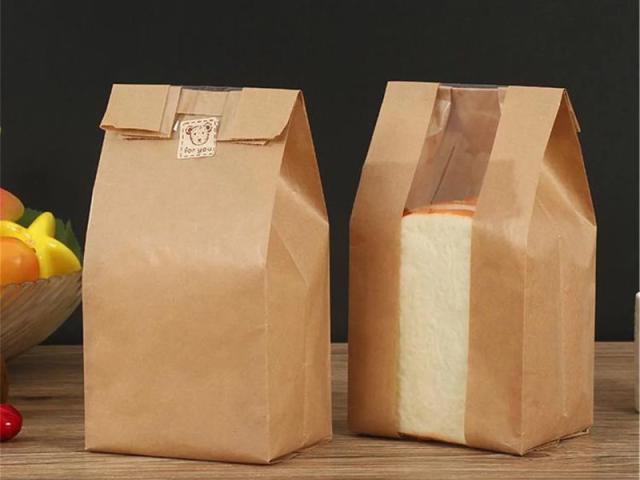
- Pizza boxes and bakery bags
- Microwave popcorn bags
- Paper cups and takeaway containers
- Baking papers and parchment
Their molecular structure — a carbon-fluorine bond, one of the strongest in organic chemistry — makes them exceptionally resistant to heat, grease, and water. Unfortunately, this same stability means they persist in the environment for centuries, earning the nickname "forever chemicals."
2. The 2026 PFAS Regulatory Landscape
European Union
The EU's PFAS restriction proposal, submitted by Germany, Netherlands, Norway, Sweden, and Denmark under REACH, is the most comprehensive globally. Key developments for 2026:
- Transition period: The proposed restriction includes transition periods of 18 to 60 months depending on the application
- Food packaging impact: Food contact materials are among the earliest phase-out categories, with proposed transition periods of 18-36 months
- Member state positions: Several EU member states have implemented national bans ahead of the EU-wide restriction — Denmark banned PFAS in paperboard food contact materials in 2020, and Germany has pushed for accelerated timelines
United States
US regulation operates at both federal and state levels:
- FDA: The FDA announced in 2024 that authorized PFAS uses in food contact applications had been voluntarily phased out by manufacturers. By 2026, no new PFAS-based food contact substances are being authorized
- State-level bans: Over 15 states have enacted PFAS restrictions affecting food packaging, including California (AB 1200), New York, Washington, Vermont, Connecticut, Maine, Minnesota, and Rhode Island. These laws generally prohibit the intentional addition of PFAS in paper-based food packaging
- EPA: The EPA has designated PFOA and PFOS as hazardous substances under CERCLA and is developing drinking water standards that indirectly increase pressure on industrial PFAS users
Asia
- China: China's Ministry of Ecology and Environment has included PFOS, PFOA, and PFHxS in its Catalogue of Priority New Chemicals for strict management. Food contact materials regulations increasingly reference PFAS restrictions aligned with EU standards
- Japan: Japan has designated PFOA and PFOS as Class I Specified Chemical Substances under its Chemical Substances Control Law, effectively banning their production and import
- South Korea: Korea has restricted PFOS and PFOA and is actively evaluating broader PFAS restrictions
3. PFAS-Free Barrier Technologies for Food Packaging
The transition away from PFAS has driven rapid innovation in alternative barrier technologies. Below are the commercially viable PFAS-free alternatives available in 2026:
PHA (Polyhydroxyalkanoate) Coatings
Key properties: Marine-degradable, home-compostable, produced through microbial fermentation
Best for: Cupstock paper, lunchbox paper, greaseproof paper, heat-seal paper
Advantages: True biodegradability in both industrial and home composting conditions; renewable raw materials; excellent oil resistance with proper formulation
Considerations: Higher material cost than conventional coatings; requires specific processing conditions
PLA (Polylactic Acid) Coatings
Key properties: Industrially compostable, corn-based bioplastic
Best for: Cupstock paper, cold beverage cups, food containers
Advantages: Mature supply chain; competitive pricing; clear regulatory pathway under EN 13432
Considerations: Industrial composting required for degradation; limited heat resistance
Water-Based Barrier Coatings
Key properties: PFAS-free, recyclable, repulpable
Best for: Cupstock board, burger wrappers, food service board, placemats, coated kraft paper
Advantages: Excellent water and grease resistance; compatible with existing paper recycling streams; cost-effective for high-volume applications; can be formulated for heat-seal properties
Considerations: Performance varies by formulation; may require optimization for specific applications
Biodegradable Barrier Paper
Key properties: Fully compostable, plastic-free, fiber-based solutions
Best for: General food wrapping, dry goods packaging, secondary packaging
Advantages: Lowest environmental footprint; simple end-of-life processing; plastic-free claim
Considerations: Limited moisture barrier compared to synthetic coatings; best suited for low-moisture applications
Laminated Barrier Solutions
Key properties: Multi-layer structures combining paper with biodegradable films
Best for: High-barrier requirements, long shelf-life products
Advantages: Superior oxygen and moisture barrier; can be engineered for specific performance requirements
Considerations: More complex recycling; higher production cost
4. How to Choose the Right PFAS-Free Alternative
| Application | Recommended Technology | Key Consideration |
|---|---|---|
| Paper cups (hot beverages) | Water-based coating or PLA | Heat and liquid resistance |
| Paper cups (cold beverages) | PLA or Water-based coating | Condensation resistance |
| Fast food wrappers | Water-based coating | Grease resistance at low cost |
| Baking/parchment paper | Silicone coating or PHA | High-temperature stability |
| Takeaway containers | PHA or PLA coating | Structural integrity + compostability |
| Ice cream cups | PLA coating | Cold grease resistance |
| Heat-seal packaging | PHA heat-seal coating | Seal strength + compostability |
5. Cost Implications of the PFAS Transition
The cost of transitioning to PFAS-free packaging varies significantly based on the chosen technology and application. Key factors to consider:
- Material cost premium: PFAS-free alternatives typically carry a 10-30% cost premium over conventional PFAS-containing materials, though prices are converging as production scales
- Processing adjustments: Converting lines may need modifications for new coatings, particularly for heat-seal and application-weight control
- Regulatory avoidance cost: The cost of non-compliance — including product recalls, fines, and reputational damage — far outweighs the transition investment
- Consumer preference: 73% of consumers in a 2025 EU survey indicated they would pay more for PFAS-free food packaging
6. Verification and Certification
To ensure your PFAS-free claim is substantiated, seek materials certified by recognized third-party programs:
- OK Compost HOME / INDUSTRIAL (TÜV Austria) — for compostable packaging claims
- FDA Food Contact Notification — for US market compliance
- EU Framework Regulation (EC) 1935/2004 — for European market
- BSI / DIN Certco — for biodegradability certifications
- Total Fluorine Testing (EN 14582 / ASTM D7359) — to verify no intentionally added PFAS
7. Future Outlook: Beyond PFAS
The PFAS phase-out marks a paradigm shift in food packaging — from relying on synthetic "forever chemicals" to embracing bio-based, circular solutions. Looking ahead to 2027 and beyond:
- Material innovation: Next-generation bio-based barrier materials, including protein-based coatings and nanocellulose barriers, are advancing from lab to pilot scale
- Regulatory convergence: While global PFAS regulations are currently fragmented, a trend toward harmonization is emerging, particularly around the OECD definition of PFAS
- Circular economy integration: The PFAS-free transition aligns with broader EU and US circular economy initiatives, creating synergies with packaging reduction and recycling targets
- Supply chain consolidation: As the market matures, strategic partnerships between material suppliers and converters will become critical competitive advantages
8. Action Plan for Food Brands
- Audit current packaging: Identify all packaging materials that may contain intentionally added PFAS
- Engage suppliers: Request PFAS-free certification and total fluorine test results from current suppliers
- Test alternatives: Work with material suppliers to trial PFAS-free alternatives on existing converting lines
- Plan transition timeline: Map regulatory deadlines against lead times for material qualification and line conversion
- Communicate to stakeholders: Develop clear messaging about the PFAS-free transition for customers, investors, and regulators
- Verify compliance: Implement ongoing testing and documentation protocols to maintain PFAS-free certification
Conclusion
The PFAS era in food packaging is ending. By mid-2026, the trajectory is irreversible: global regulations, market demand, and material innovation have aligned to accelerate the transition to PFAS-free alternatives. For food brands and packaging professionals, the question is no longer whether to transition, but how quickly and strategically they can make the shift. Bofeng New Materials offers a comprehensive portfolio of PFAS-free barrier papers, including PHA-coated, PLA-coated, water-based coated, and biodegradable barrier paper solutions, all certified for food contact compliance. Contact our technical team to discuss your specific packaging requirements.
This guide was published in June 2026 and reflects the regulatory landscape as of that date. For the latest regulatory developments, consult official sources.